
GERD & Hiatal Hernia
- Home
- /
- Esophagus Diseases
- /
- GERD & Hiatal Hernia
What is GERD?
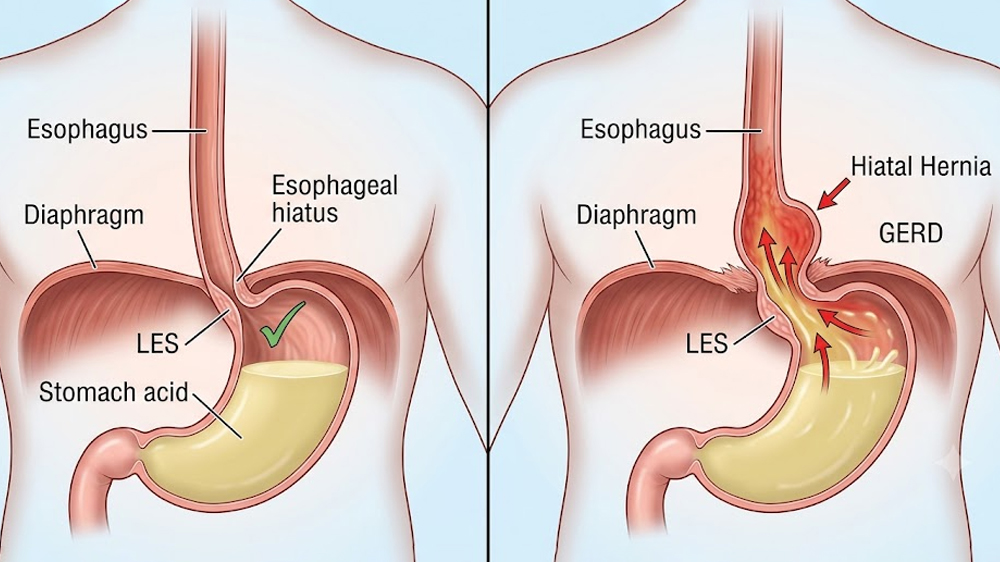
Gastroesophageal Reflux Disease (GERD) is a chronic digestive disorder where stomach acid or bile frequently flows back into the esophagus, causing irritation and inflammation. This happens when the lower esophageal sphincter (LES) – a ring of muscle at the junction of the esophagus and stomach – weakens or relaxes inappropriately, allowing stomach contents to reflux upward.
GERD is one of the most common gastrointestinal conditions, affecting millions of people worldwide. While occasional acid reflux is normal, GERD is diagnosed when symptoms occur more than twice a week or when they cause significant discomfort or tissue damage.
What is a Hiatal Hernia?
A hiatal hernia occurs when a portion of the stomach pushes upward through the diaphragm into the chest cavity. The diaphragm is the muscle that separates the chest from the abdomen and contains a small opening called the hiatus, through which the esophagus passes. When this opening weakens or enlarges, the stomach can herniate upward.
Hiatal hernias are strongly associated with GERD, as the hernia can disrupt the normal function of the lower esophageal sphincter, making it easier for stomach acid to reflux into the esophagus. There are two main types: sliding hiatal hernia (most common, where the stomach slides in and out of the chest) and paraesophageal hernia (where part of the stomach pushes through the hiatus alongside the esophagus).
Symptoms of GERD and Hiatal Hernia
Common signs and symptoms include:
- Heartburn – a burning sensation in the chest, especially after meals or at night
- Acid regurgitation – sour or bitter taste in the mouth
- Chest pain or discomfort
- Difficulty swallowing (dysphagia)
- Chronic cough or hoarseness
- Sore throat or feeling of a lump in the throat
- Belching or bloating after meals
- Nausea or vomiting
Symptoms may worsen after eating large meals, lying down, bending over, or consuming certain foods like spicy, fatty, or acidic items.
Causes and Risk Factors
Several factors can contribute to the development of GERD and hiatal hernia:
- Obesity – increased abdominal pressure can push stomach contents upward
- Pregnancy – hormonal changes and increased pressure on the abdomen
- Age – the risk of hiatal hernia increases with age
- Smoking – weakens the lower esophageal sphincter
- Dietary factors – spicy, fatty, or acidic foods, caffeine, and alcohol
- Heavy lifting or straining – can weaken the diaphragm and cause herniation
- Connective tissue disorders – may weaken the supportive structures
- Genetic predisposition – family history of GERD or hiatal hernia
Diagnosis of GERD and Hiatal Hernia
Accurate diagnosis is essential for effective treatment. The following tests may be used:
- Upper GI Endoscopy (EGD) – visual examination of the esophagus, stomach, and duodenum to assess damage and rule out other conditions
- Barium Swallow X-ray – shows the anatomy of the esophagus, stomach, and the presence of a hiatal hernia
- 24-hour pH Monitoring – measures acid exposure in the esophagus over 24 hours
- Esophageal Manometry – evaluates the function and strength of the esophageal muscles and LES
- CT Scan – may be used to evaluate the size and type of hiatal hernia
Treatment Options for GERD and Hiatal Hernia
Treatment depends on the severity of symptoms and the presence of complications. Dr. Surendra Pal Jakhar offers a comprehensive range of treatment options:
- Lifestyle Modifications – weight loss, dietary changes, elevation of the head of the bed, avoiding large meals before bedtime
- Medical Therapy – proton pump inhibitors (PPIs), H2 blockers, antacids, and prokinetic agents
- Laparoscopic Fundoplication – a minimally invasive surgical procedure that wraps the upper part of the stomach (fundus) around the lower esophagus to reinforce the LES and prevent reflux
- Laparoscopic Hiatal Hernia Repair – the herniated portion of the stomach is pulled back into the abdomen, and the hiatal opening is tightened
- Robotic-Assisted Fundoplication – offers enhanced precision and visualization for complex cases
- Endoscopic Anti-Reflux Procedures – newer minimally invasive options for selected patients
Surgical treatment is typically recommended for patients who do not respond to medication, have significant hiatal hernias, or develop complications such as Barrett's esophagus or strictures.
Recovery After GERD or Hiatal Hernia Surgery
Recovery from laparoscopic fundoplication or hiatal hernia repair typically involves a short hospital stay (1-3 days). Most patients experience significant improvement in reflux symptoms immediately after surgery. Post-operative care includes:
- A liquid or soft diet initially, gradually transitioning to solid foods over 4-6 weeks
- Pain management with prescribed medications
- Avoidance of heavy lifting and strenuous activities for 4-6 weeks
- Follow-up appointments to monitor progress
Long-term results are excellent, with most patients experiencing lasting relief from GERD symptoms and improved quality of life.
Why Choose Dr. Surendra Pal Jakhar for GERD and Hiatal Hernia Treatment?
- Expert in both medical and surgical management of GERD and hiatal hernia
- Specializes in laparoscopic fundoplication and hiatal hernia repair with excellent outcomes
- Experience in robotic-assisted procedures for complex cases
- Comprehensive pre-operative evaluation and post-operative follow-up
- Personalized treatment plans tailored to each patient's needs
- Over 10+ years of experience in gastrointestinal and esophageal surgery
If you are experiencing persistent heartburn, reflux, or other symptoms of GERD or hiatal hernia, schedule a consultation with Dr. Surendra Pal Jakhar for expert diagnosis and personalized treatment.
Book a Consultation
Early diagnosis and timely treatment are essential for preventing complications such as esophageal strictures, Barrett's esophagus, or aspiration pneumonia. Contact our clinic today to book an appointment with Dr. Surendra Pal Jakhar, one of the best gastrointestinal and advanced laparoscopic surgeons in Jaipur.