
Cysto-Enterostomy
- Home
- /
- Pancreatic Disorders
- /
- Cysto-Enterostomy
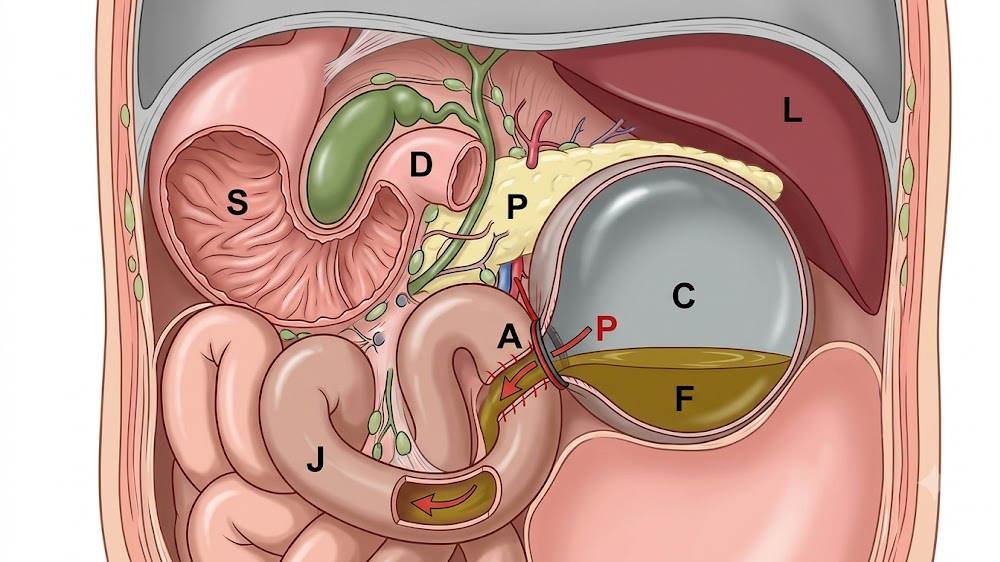
Internal Drainage for Pancreatic Pseudocysts
Cysto-enterostomy is a surgical procedure that creates an internal drainage pathway between a pancreatic pseudocyst and the gastrointestinal tract (usually the stomach, duodenum, or jejunum). This procedure is performed to drain the pseudocyst internally, allowing its contents to pass into the bowel rather than accumulating and causing complications.
Dr. Surendra Pal Jakhar has extensive experience in performing cysto-enterostomy for patients with symptomatic pancreatic pseudocysts. Using advanced surgical techniques, this procedure provides definitive treatment for pseudocysts that are not amenable to endoscopic drainage, offering relief from pain and preventing life-threatening complications.
Indications for Cysto-Enterostomy
- Symptomatic Pancreatic Pseudocysts: Causing abdominal pain, early satiety, or gastric outlet obstruction.
- Large Pseudocysts (> 6 cm): With significant mass effect or risk of rupture.
- Pseudocysts with Complications: Infection, hemorrhage, or biliary obstruction.
- Failed Endoscopic Drainage: Patients where endoscopic cysto-gastrostomy or cysto-duodenostomy was unsuccessful.
- Inaccessible Pseudocysts: Pseudocysts not amenable to endoscopic intervention due to location or anatomy.
- Mature Pseudocysts: With a well-formed wall (typically > 6 weeks old) suitable for surgical anastomosis.
Surgical Procedure Details
- Preoperative Preparation: Comprehensive evaluation with CT scan, MRI/MRCP, and endoscopic ultrasound. Nutritional optimization and management of any associated pancreatitis.
- Incision: Usually performed via an open approach (midline or transverse incision), though laparoscopic approaches are increasingly being used in selected patients.
- Pseudocyst Localization: The pseudocyst is identified and its relationship to surrounding structures (stomach, duodenum, colon) is assessed.
- Anastomosis Creation: A side-to-side anastomosis is created between the pseudocyst and the chosen gastrointestinal structure (stomach, duodenum, or jejunum) using absorbable sutures or stapling devices.
- Drainage Confirmation: The anastomosis is checked for patency and hemostasis. A drainage tube may be placed temporarily.
- Completion: The abdomen is closed with drains placed near the anastomotic site.
Types of Cysto-Enterostomy
- Cysto-Gastrostomy: Anastomosis between the pseudocyst and the posterior wall of the stomach – the most commonly performed type.
- Cysto-Duodenostomy: Anastomosis between the pseudocyst and the duodenum – preferred for pseudocysts in the head of the pancreas.
- Cysto-Jejunostomy: Anastomosis between the pseudocyst and a Roux-en-Y loop of jejunum – used when the pseudocyst is not in proximity to the stomach or duodenum.
Benefits of Cysto-Enterostomy
- Definitive internal drainage of the pseudocyst
- Resolution of pain and abdominal symptoms
- Prevention of life-threatening complications (rupture, hemorrhage, infection)
- Preservation of pancreatic function
- Lower recurrence rates compared to external drainage
- Improved quality of life and nutritional status
Post-Operative Care and Recovery
- Hospital stay typically 5-10 days depending on the complexity of the procedure
- Intravenous antibiotics, fluids, and nutritional support
- Close monitoring of amylase, lipase, and signs of infection
- Gradual advancement of diet – starting with clear liquids and progressing to a low-fat diet
- Follow-up imaging (CT or ultrasound) to confirm pseudocyst resolution and assess anastomotic patency
- Regular follow-up with the surgeon and gastroenterologist for long-term management
Why Choose Dr. Surendra Pal Jakhar?
Dr. Surendra Pal Jakhar is a highly experienced gastrointestinal and pancreatic surgeon with specialized expertise in complex pancreatic surgeries including cysto-enterostomy. His meticulous surgical technique, comprehensive preoperative evaluation, and compassionate patient care ensure the best possible outcomes for patients with pancreatic pseudocysts. Dr. Jakhar works closely with a multidisciplinary team including gastroenterologists, interventional radiologists, and nutritionists to provide holistic care tailored to each patient's condition.
Schedule a consultation today to discuss your pancreatic pseudocyst and explore the best treatment options available.