
Laparoscopic Necrosectomy
- Home
- /
- Pancreatic Disorders
- /
- Laparoscopic Necrosectomy
Minimally Invasive Treatment for Pancreatic Necrosis
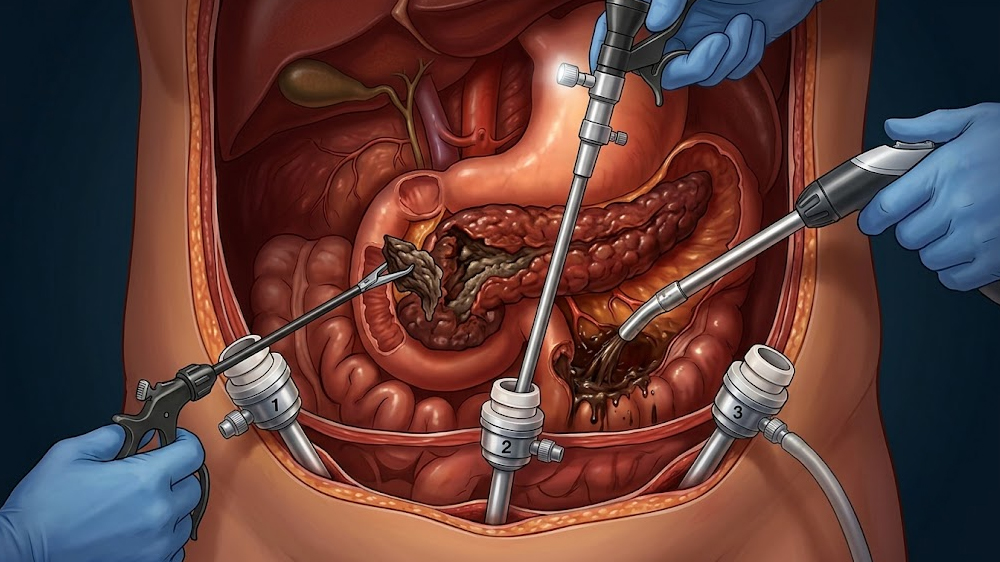
Laparoscopic necrosectomy is a minimally invasive surgical procedure performed to remove infected or necrotic (dead) tissue from the pancreas and surrounding areas. This condition typically occurs as a complication of severe acute pancreatitis, where pancreatic tissue undergoes necrosis (tissue death) and becomes infected, leading to sepsis and organ failure if left untreated.
Dr. Surendra Pal Jakhar has extensive experience in performing laparoscopic necrosectomy for patients with infected pancreatic necrosis. This advanced minimally invasive approach offers significant benefits over traditional open surgery, including reduced morbidity, faster recovery, and improved patient outcomes.
Indications for Laparoscopic Necrosectomy
- Infected Pancreatic Necrosis: Confirmed by CT imaging with gas bubbles or positive culture from fine-needle aspiration.
- Severe Acute Pancreatitis: With persistent organ failure and evidence of necrosis on contrast-enhanced CT.
- Walled-Off Necrosis (WON): Encapsulated necrotic collections that are not resolving with conservative management.
- Clinical Deterioration: Worsening sepsis, organ failure, or metabolic derangements despite maximal medical therapy.
- Failed Percutaneous Drainage: Patients who have not responded to image-guided drainage procedures.
Surgical Procedure Details
- Preoperative Preparation: Comprehensive assessment with CT scan, MRI, and nutritional optimization. Broad-spectrum antibiotics and correction of electrolyte imbalances.
- Approach: Laparoscopic access through multiple small incisions with specialized instruments and a camera for visualization.
- Necrosectomy: Careful removal of necrotic tissue using graspers, suction-irrigation devices, and advanced energy devices while preserving viable pancreatic tissue.
- Drainage: Placement of large-bore drains for postoperative irrigation and drainage of residual debris.
- Staged or Single-Stage: The procedure may be performed as a single-stage complete debridement or as a staged approach (step-up approach) with repeated procedures.
Benefits of Laparoscopic Necrosectomy
- Minimally invasive – smaller incisions, less pain, and faster recovery
- Reduced risk of wound complications and incisional hernias
- Shorter ICU and hospital stay compared to open surgery
- Lower morbidity and mortality rates in appropriately selected patients
- Improved postoperative recovery and earlier return to normal activities
- Better cosmetic outcomes
Post-Operative Care and Recovery
- ICU admission for close monitoring of vital signs and organ function
- Intravenous antibiotics and supportive care
- Enteral or parenteral nutrition support as needed
- Regular CT imaging to assess the completeness of necrosectomy and detect any residual collections
- Gradual advancement of diet – starting with clear liquids and progressing to a low-fat diet
- Drain management and removal when output decreases
- Long-term follow-up for pancreatic endocrine and exocrine function monitoring
Why Choose Dr. Surendra Pal Jakhar?
Dr. Surendra Pal Jakhar is a highly experienced gastrointestinal and pancreatic surgeon with specialized expertise in minimally invasive pancreatic surgery including laparoscopic necrosectomy. His approach combines advanced laparoscopic skills with a comprehensive understanding of the pathophysiology of severe acute pancreatitis. Dr. Jakhar works closely with a multidisciplinary team of intensivists, gastroenterologists, and interventional radiologists to provide optimal care for patients with pancreatic necrosis.
Contact us today to discuss your condition and explore the best treatment options for pancreatic necrosis.