
Laparoscopic Ileocecal Resection
- Home
- /
- Large Bowel Disorders
- /
- Laparoscopic Ileocecal Resection
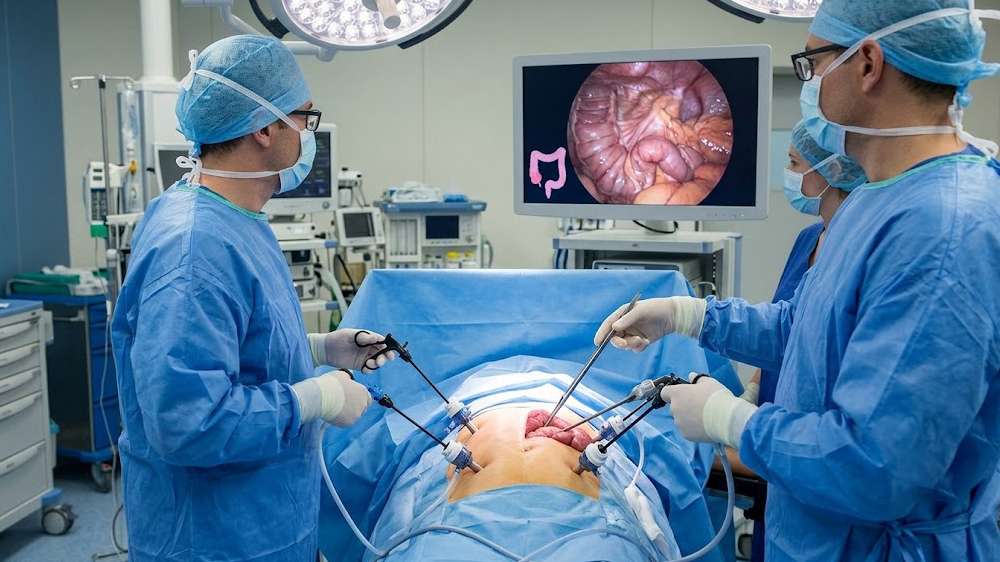
Minimally Invasive Surgery for Ileocecal Conditions
Laparoscopic ileocecal resection is a minimally invasive surgical procedure that involves removal of the terminal ileum, ileocecal valve, and cecum. This procedure is commonly performed for conditions affecting the ileocecal region, including Crohn's disease, tuberculosis, and tumors. The laparoscopic approach offers significant benefits over traditional open surgery, including smaller incisions, less postoperative pain, faster recovery, and better cosmetic outcomes.
Dr. Surendra Pal Jakhar has extensive experience in performing laparoscopic ileocecal resection for various conditions. His expertise in advanced laparoscopic techniques ensures safe and effective surgery with optimal outcomes for patients with ileocecal disorders.
Indications for Laparoscopic Ileocecal Resection
- Crohn's Disease: Terminal ileitis or ileocecal involvement that is refractory to medical therapy or complicated by strictures, fistulas, or abscesses.
- Intestinal Tuberculosis: Ileocecal tuberculosis causing obstruction, bleeding, or perforation.
- Cecal Tumors: Benign or malignant tumors of the cecum requiring surgical excision.
- Ileocecal Valve Dysfunction: Severe dysfunction causing recurrent bacterial overgrowth or obstruction.
- Severe Appendicitis: Extensive inflammation involving the cecum.
- Trauma: Injury to the ileocecal region requiring resection.
- Ischaemic Bowel Disease: Ischaemic changes localized to the ileocecal region.
Surgical Procedure Details
- Preoperative Preparation: Comprehensive evaluation with imaging (CT scan, MRI, or small bowel follow-through). Bowel preparation (mechanical and antibiotic) is typically performed to reduce the risk of infection.
- Anesthesia: General anesthesia is administered.
- Incision: 3-5 small incisions (5-12 mm) are made for the laparoscope and instruments.
- Exploration: The abdominal cavity is inspected for any other pathology.
- Mobilization: The terminal ileum, cecum, and right colon are mobilized carefully, identifying and preserving important structures.
- Resection: The diseased segment is resected using laparoscopic stapling devices.
- Anastomosis: The ileum is anastomosed to the ascending colon (ileocolic anastomosis) using a side-to-side or end-to-side technique.
- Closure: The incisions are closed, and drains may be placed if needed.
Benefits of Laparoscopic Ileocecal Resection
- Minimally invasive – smaller incisions, less pain, and faster recovery
- Reduced risk of wound complications and incisional hernias
- Shorter hospital stay compared to open surgery
- Earlier return to normal activities and work
- Better cosmetic outcomes
- Reduced postoperative ileus (earlier return of bowel function)
Post-Operative Care and Recovery
- Hospital stay typically 3-5 days
- Pain management with oral analgesics
- Early mobilization to prevent complications
- Gradual advancement of diet – starting with clear liquids and progressing to a soft, then regular diet
- Monitoring for complications such as anastomotic leak, bleeding, or infection
- Follow-up with the surgeon at 2-4 weeks post-surgery
- Regular surveillance for disease recurrence (especially in Crohn's disease)
Why Choose Dr. Surendra Pal Jakhar?
Dr. Surendra Pal Jakhar is a highly experienced laparoscopic and colorectal surgeon with specialized expertise in ileocecal resections. His approach combines advanced laparoscopic skills with comprehensive preoperative evaluation and personalized care planning. Dr. Jakhar works closely with a multidisciplinary team of gastroenterologists, nutritionists, and pathologists to provide holistic care for patients with ileocecal disorders. He is committed to achieving the best possible outcomes with minimal discomfort and downtime.
Schedule a consultation today to discuss your ileocecal condition and explore the best surgical treatment options available.