
Acute Cholecystitis
- Home
- /
- Gall Bladder Diseases
- /
- Acute Cholecystitis
Expert Surgical Management for Acute Gallbladder Inflammation
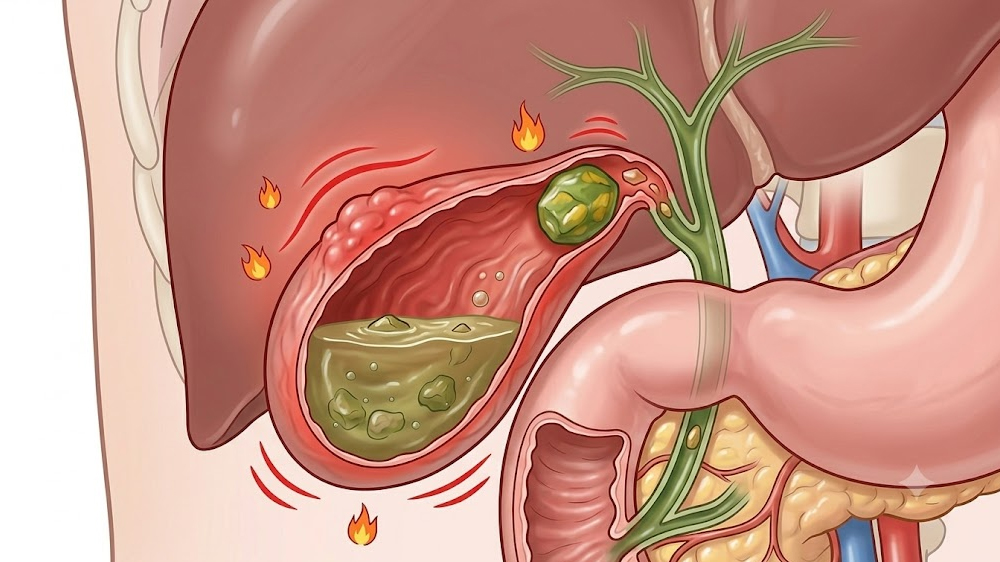
Acute cholecystitis is a sudden inflammation of the gallbladder, most commonly caused by a gallstone blocking the cystic duct. This blockage leads to bile accumulation, increased pressure, and bacterial infection, resulting in severe abdominal pain, fever, and other concerning symptoms. It is a medical emergency that requires prompt diagnosis and appropriate treatment to prevent complications such as gallbladder perforation, abscess formation, or sepsis.
Dr. Surendra Pal Jakhar provides comprehensive surgical care for acute cholecystitis, utilizing advanced laparoscopic techniques to safely remove the inflamed gallbladder and restore patient health. With a focus on timely intervention and minimally invasive approaches, we aim to minimize recovery time and optimize outcomes for our patients.
Causes of Acute Cholecystitis
- Gallstone Obstruction: The most common cause – a stone blocks the cystic duct, leading to bile stasis and inflammation.
- Bile Stasis: Prolonged fasting, total parenteral nutrition, or critical illness can lead to sludge formation and inflammation.
- Bacterial Infection: Secondary infection with E. coli, Klebsiella, or Enterococcus species.
- Vascular Compromise: Reduced blood flow to the gallbladder in conditions like diabetes or vasculitis.
- Trauma or Burns: Can precipitate acute cholecystitis in hospitalized patients.
Common Symptoms
- Severe, persistent pain in the right upper abdomen (Murphy's sign)
- Pain that radiates to the right shoulder or back
- Fever and chills (temperature above 101°F)
- Nausea and vomiting
- Loss of appetite and abdominal bloating
- Jaundice (if bile duct involvement occurs)
- Tenderness on palpation of the right upper quadrant
Diagnosis
- Ultrasound: The primary imaging modality – shows gallbladder wall thickening >4mm, pericholecystic fluid, and stone impaction.
- CT Scan: Useful for detecting complications like perforation or abscess.
- HIDA Scan: Evaluates gallbladder function and confirms obstruction of the cystic duct.
- Laboratory Tests: Elevated white blood cell count, raised C-reactive protein, and abnormal liver function tests (if bile duct involvement).
Surgical Treatment Options
- Laparoscopic Cholecystectomy: The gold standard for acute cholecystitis. Performed as an emergency or urgent procedure once the patient is optimized. Involves removing the gallbladder through small incisions with a camera.
- Open Cholecystectomy: Performed when laparoscopic surgery is not feasible due to severe inflammation, scarring, or anatomical complexity. A larger incision is made to safely remove the gallbladder.
- Percutaneous Cholecystostomy: A temporizing measure for critically ill patients who are not fit for surgery. A drainage tube is placed under ultrasound or CT guidance to decompress the gallbladder.
- Delayed (Interval) Cholecystectomy: For patients who initially present with severe inflammation and are managed conservatively with antibiotics and supportive care, followed by surgery after 6-8 weeks.
Why Choose Dr. Surendra Pal Jakhar?
Dr. Surendra Pal Jakhar has extensive experience in managing acute cholecystitis, from emergency admission to safe surgical intervention. His expertise in advanced laparoscopic techniques ensures that patients receive the most effective treatment with minimal complications. We prioritize patient safety, evidence-based decision-making, and compassionate care to achieve the best possible outcomes.
If you are experiencing severe abdominal pain, fever, or other symptoms of acute cholecystitis, seek immediate medical attention. Contact our team for expert surgical consultation and care.