
Choledocho-Duodenostomy
- Home
- /
- Bile Duct Diseases
- /
- Choledocho-Duodenostomy
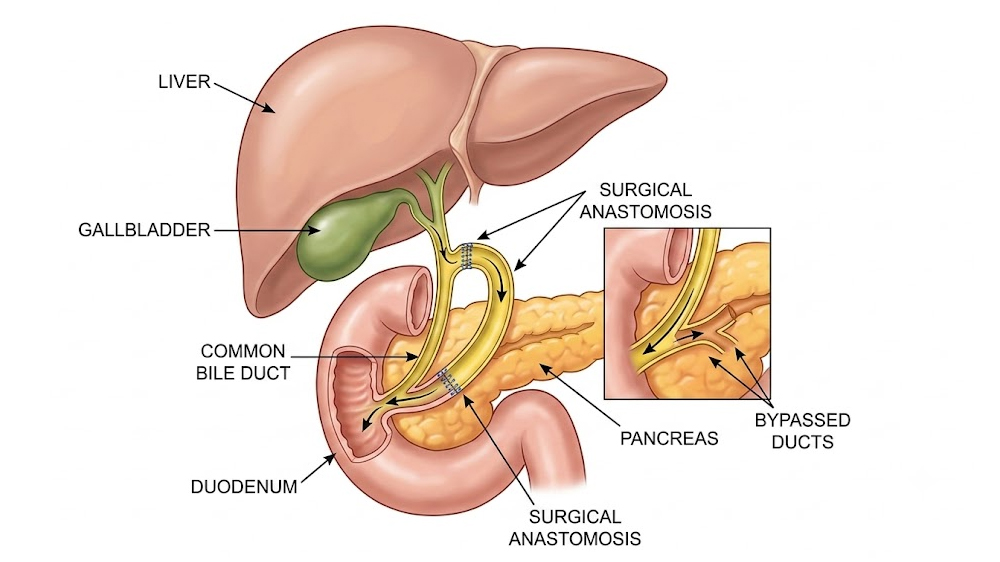
Biliary Bypass Surgery for Bile Duct Obstruction
Choledocho-duodenostomy is a surgical procedure that creates a direct anastomosis (connection) between the common bile duct and the duodenum, bypassing any obstruction in the distal bile duct. This procedure is performed to restore normal bile flow when the lower end of the bile duct is blocked due to benign or malignant conditions.
Dr. Surendra Pal Jakhar has extensive experience in performing choledocho-duodenostomy for patients with bile duct obstruction, utilizing meticulous surgical techniques to ensure a patent anastomosis and optimal outcomes. This procedure provides effective biliary drainage and relief from symptoms such as jaundice, pruritus, and cholangitis.
Indications for Choledocho-Duodenostomy
- Benign Bile Duct Strictures: Post-inflammatory, post-traumatic, or iatrogenic strictures.
- Malignant Bile Duct Obstruction: Pancreatic cancer, cholangiocarcinoma, or ampullary tumors (palliative or curative intent).
- Recurrent Choledocholithiasis: Large or recurrent common bile duct stones not amenable to endoscopic removal.
- Failed ERCP: Patients in whom endoscopic stone retrieval or stenting was unsuccessful.
- Chronic Pancreatitis: With distal bile duct compression and obstruction.
- Bile Duct Injury: Post-cholecystectomy bile duct injuries requiring surgical reconstruction.
Surgical Procedure Details
- Preoperative Preparation: Thorough evaluation with MRCP, CT scan, and liver function tests. Nutritional optimization and management of cholangitis/jaundice.
- Incision: Usually performed via an open approach (midline or right subcostal incision), though laparoscopic approaches are being explored in select cases.
- Bile Duct Mobilization: The common bile duct is dissected and mobilized to allow a tension-free anastomosis.
- Duodenal Preparation: The duodenum is mobilized and an incision is made on its anterolateral wall.
- Anastomosis: A side-to-side or end-to-side anastomosis is created between the bile duct and duodenum using absorbable sutures, ensuring a wide communication (at least 2-3 cm) to prevent stricture.
- Biliary Stenting (optional): A T-tube or internal stent may be placed for short-term biliary drainage.
Benefits of Choledocho-Duodenostomy
- Effective and durable biliary drainage
- Resolution of jaundice and pruritus
- Prevention of recurrent cholangitis
- Improved quality of life in patients with malignant obstruction
- Lower risk of anastomotic stricture compared to choledochojejunostomy
- Preserves the natural biliary-enteric anatomy and facilitates postoperative endoscopic access
Post-Operative Care and Recovery
- Hospital stay typically 5-10 days depending on the complexity of the procedure
- Intravenous antibiotics and supportive care
- Gradual advancement of diet – starting with clear liquids and progressing to a low-fat diet
- Close monitoring of liver function tests, bilirubin levels, and signs of sepsis
- Follow-up imaging (ultrasound or CT) to assess anastomotic patency and exclude complications
- Regular follow-up with the surgeon and oncologist (if indicated) for long-term surveillance
Why Choose Dr. Surendra Pal Jakhar?
Dr. Surendra Pal Jakhar is a highly experienced gastrointestinal and hepatobiliary surgeon with specialized expertise in complex biliary reconstructive surgeries including choledocho-duodenostomy. His meticulous surgical technique, comprehensive preoperative evaluation, and compassionate patient care ensure the best possible outcomes for patients with bile duct obstruction. Dr. Jakhar works closely with a multidisciplinary team to provide individualized treatment plans tailored to each patient's condition and goals.
Schedule a consultation today to discuss your bile duct condition and explore the best treatment options available.