
Hiatal Hernia
- Home
- /
- Hernia Surgery
- /
- Hiatal Hernia
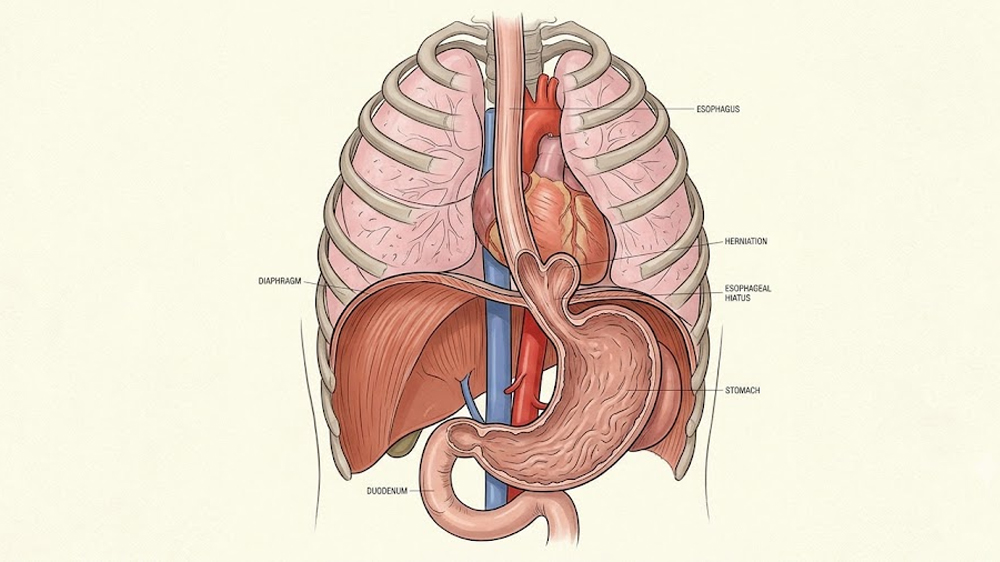
What is a Hiatal Hernia?
A hiatal hernia occurs when the upper part of the stomach pushes up through the diaphragm and into the chest cavity. The diaphragm is a large muscle that separates the abdomen from the chest and helps with breathing. Normally, the stomach is located below the diaphragm, but in a hiatal hernia, it protrudes through the hiatus—an opening in the diaphragm through which the esophagus passes.
Hiatal hernias are very common, especially in people over 50 years of age. Many people with a hiatal hernia experience no symptoms, while others may develop gastroesophageal reflux disease (GERD) or other digestive issues. In most cases, hiatal hernias are discovered incidentally during tests for other conditions.
Types of Hiatal Hernia
There are two main types of hiatal hernias:
- Sliding Hiatal Hernia – the most common type, where the stomach and the lower part of the esophagus slide up into the chest through the hiatus. This type is often associated with GERD.
- Paraesophageal Hiatal Hernia – a less common but more serious type, where the stomach pushes up through the hiatus and sits next to the esophagus, without the esophagus moving. This type carries a higher risk of strangulation and requires surgical repair.
Symptoms of Hiatal Hernia
Common signs and symptoms of a hiatal hernia include:
- Heartburn or acid reflux, especially after meals or when lying down
- Chest pain or discomfort, which may be mistaken for heart-related issues
- Difficulty swallowing (dysphagia)
- Regurgitation of food or sour liquid
- A feeling of fullness or pressure in the upper abdomen
- Shortness of breath or difficulty breathing in severe cases
- Belching or hiccups that persist
Many people with small hiatal hernias experience no symptoms and may not require treatment.
Causes and Risk Factors
Several factors can contribute to the development of a hiatal hernia:
- Aging – weakening of the diaphragm with age
- Obesity – increased pressure on the abdomen
- Chronic coughing – conditions like COPD or smoking
- Heavy lifting – straining the abdominal muscles
- Frequent straining – due to constipation or pregnancy
- Genetics – some individuals may be born with a larger hiatus
- Injury or trauma – to the abdomen or diaphragm
Hiatal Hernia Treatment Options
Treatment for hiatal hernia depends on the severity of symptoms and the type of hernia. Many small hiatal hernias are managed with lifestyle changes and medications, while larger or symptomatic hernias may require surgical intervention. Dr. Surendra Pal Jakhar offers several surgical approaches:
- Lifestyle modifications – weight loss, dietary changes, and avoiding heavy lifting
- Medications – antacids, proton pump inhibitors (PPIs), and H2 blockers to manage acid reflux
- Laparoscopic Hiatal Hernia Repair – a minimally invasive procedure where the stomach is pulled back below the diaphragm and the hiatus is tightened. A mesh may be used for reinforcement.
- Robotic-Assisted Hiatal Hernia Repair – utilizes robotic technology for enhanced precision, particularly beneficial for complex or recurrent hernias.
- Fundoplication – often performed alongside hiatal hernia repair to prevent acid reflux, where the top of the stomach is wrapped around the lower esophagus.
The choice of surgical approach depends on the type and size of the hernia, patient health, and surgeon's recommendation.
Recovery After Hiatal Hernia Surgery
Recovery time depends on the type of surgery performed. Patients undergoing laparoscopic or robotic surgery typically return to normal activities within 2–3 weeks. Post-operative care includes:
- Dietary modifications – starting with liquids and progressing to soft foods
- Rest and avoidance of heavy lifting for 4–6 weeks
- Pain management with prescribed medications
- Follow-up appointments to monitor healing
- Gradual return to physical activities as advised
Why Choose Dr. Surendra Pal Jakhar for Hiatal Hernia Surgery?
- Expert in advanced laparoscopic and robotic hiatal hernia repair techniques
- High success rate with minimal recurrence
- Specialized in managing GERD and other acid-related conditions
- Personalized care with comprehensive pre- and post-operative support
- Use of premium quality mesh for durable and safe repair
- Over 10+ years of experience in gastrointestinal and hernia surgery
If you or a loved one are experiencing symptoms of a hiatal hernia, schedule a consultation with Dr. Surendra Pal Jakhar for an accurate diagnosis and personalized treatment plan.
Book a Consultation
Early diagnosis and timely treatment are essential for preventing complications such as strangulation or severe GERD. Contact our clinic today to book an appointment with Dr. Surendra Pal Jakhar, one of the best gastrointestinal and advanced laparoscopic surgeons in Jaipur.