
Esophageal Cancer
- Home
- /
- Esophagus Diseases
- /
- Esophageal Cancer
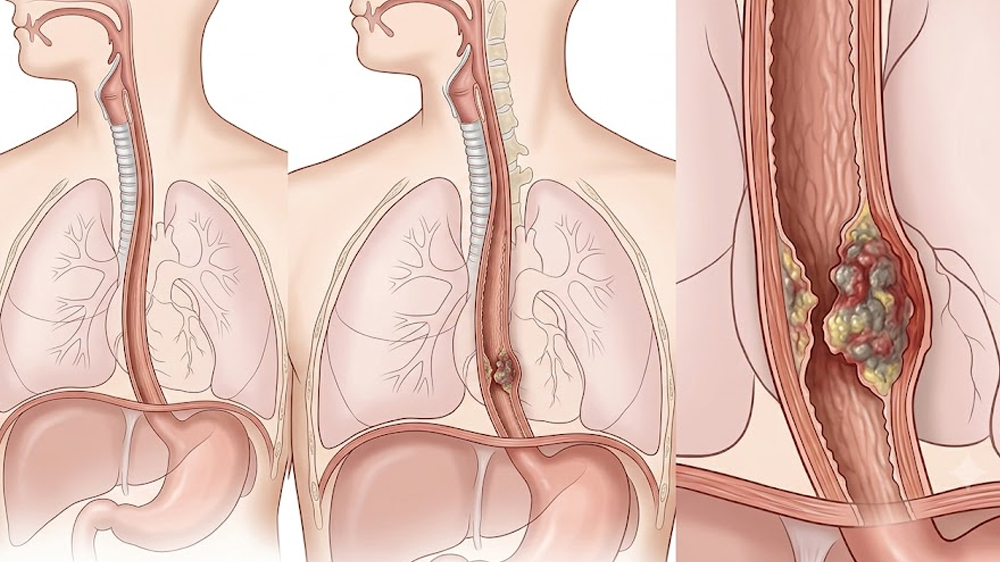
What is Esophageal Cancer?
Esophageal cancer is a malignant tumor that originates in the esophagus, the long, hollow tube that carries food and liquid from the throat to the stomach. It is a relatively uncommon but serious cancer, known for its aggressive nature and often late diagnosis.
The two main types of esophageal cancer are squamous cell carcinoma, which develops in the flat cells lining the esophagus, and adenocarcinoma, which typically arises in the glandular cells near the stomach, often linked to chronic acid reflux and Barrett's esophagus. Early detection and treatment are critical for improving outcomes.
Risk Factors for Esophageal Cancer
Several factors can increase the risk of developing esophageal cancer:
- Tobacco and Alcohol Use – heavy smoking and drinking are major risk factors, particularly for squamous cell carcinoma
- Chronic Acid Reflux (GERD) – long-term irritation increases the risk of Barrett's esophagus and adenocarcinoma
- Barrett's Esophagus – a precancerous condition where the esophageal lining changes, increasing cancer risk
- Obesity – associated with higher rates of adenocarcinoma
- Age and Gender – more common in people over 60 and in men
- Dietary Factors – low intake of fruits and vegetables, and diets high in processed meats
- Achalasia – a motility disorder that can lead to food stasis and increased risk
- Family History – genetic predisposition to certain cancers
Symptoms of Esophageal Cancer
Esophageal cancer often does not cause symptoms in its early stages. As it progresses, symptoms may include:
- Difficulty swallowing (dysphagia) – often the first noticeable symptom
- Unintentional weight loss
- Chest pain or discomfort
- Hoarseness or chronic cough
- Indigestion or heartburn that worsens
- Painful swallowing (odynophagia)
- Bleeding in the esophagus, leading to dark stools or anemia
If you experience any of these symptoms, especially difficulty swallowing, it is crucial to seek medical evaluation promptly.
Diagnosis of Esophageal Cancer
Accurate diagnosis is essential for effective treatment planning. The following tests may be used:
- Upper GI Endoscopy (EGD) – visual examination with a biopsy to confirm cancer and determine cell type
- Barium Swallow X-ray – shows narrowing or irregularities in the esophagus
- Endoscopic Ultrasound (EUS) – assesses the depth of tumor invasion and lymph node involvement
- CT Scan and PET-CT – to evaluate the extent of the cancer and check for metastasis
- Bronchoscopy – if the tumor is in the upper esophagus, to check for airway involvement
- Laparoscopy or Thoracoscopy – for staging and to detect peritoneal or pleural spread
Treatment Options for Esophageal Cancer
Treatment depends on the stage, type, and location of the cancer, as well as the patient's overall health. Dr. Surendra Pal Jakhar offers a multidisciplinary approach including:
- Surgical Resection (Esophagectomy) – removal of part or all of the esophagus, often with reconstruction using a portion of the stomach or intestine
- Minimally Invasive Esophagectomy – laparoscopic or thoracoscopic techniques for reduced recovery time and fewer complications
- Robotic-Assisted Esophagectomy – enhanced precision for complex resections
- Neoadjuvant Therapy – chemotherapy and radiation before surgery to shrink tumors and improve outcomes
- Adjuvant Therapy – chemotherapy or radiation after surgery to eliminate remaining cancer cells
- Palliative Treatments – for advanced cases, including stenting, laser therapy, and radiation to relieve symptoms
Early-stage esophageal cancer may be treated with endoscopic resection or ablation, while more advanced cases often require a combination of systemic therapy and surgery.
Recovery After Esophageal Cancer Surgery
Recovery from esophagectomy is a gradual process and typically involves a hospital stay of 1-2 weeks. Patients may need nutritional support initially, with a diet progressing from liquids to soft foods. Post-operative care includes:
- Pain management and monitoring for complications
- Nutritional guidance and gradual reintroduction of solid foods
- Physical therapy to regain strength
- Regular follow-up appointments to monitor for recurrence
Long-term outcomes are improving with newer surgical techniques and multimodal treatment approaches.
Why Choose Dr. Surendra Pal Jakhar for Esophageal Cancer Treatment?
- Expertise in complex esophageal cancer surgeries including esophagectomy
- Experience in minimally invasive and robotic-assisted techniques
- Multidisciplinary care coordination with oncologists and radiologists
- Comprehensive pre-operative evaluation and post-operative rehabilitation
- Personalized treatment plans tailored to each patient's stage and needs
- Over 10+ years of experience in gastrointestinal and esophageal surgery
If you or a loved one has been diagnosed with esophageal cancer, early intervention is key. Schedule a consultation with Dr. Surendra Pal Jakhar for expert care and advanced treatment options.
Book a Consultation
Prompt evaluation and treatment can significantly improve outcomes. Contact our clinic today to book an appointment with Dr. Surendra Pal Jakhar, one of the best gastrointestinal and advanced laparoscopic surgeons in Jaipur.