
Incisional Hernia
- Home
- /
- Hernia Surgery
- /
- Incisional Hernia
What is an Incisional Hernia?
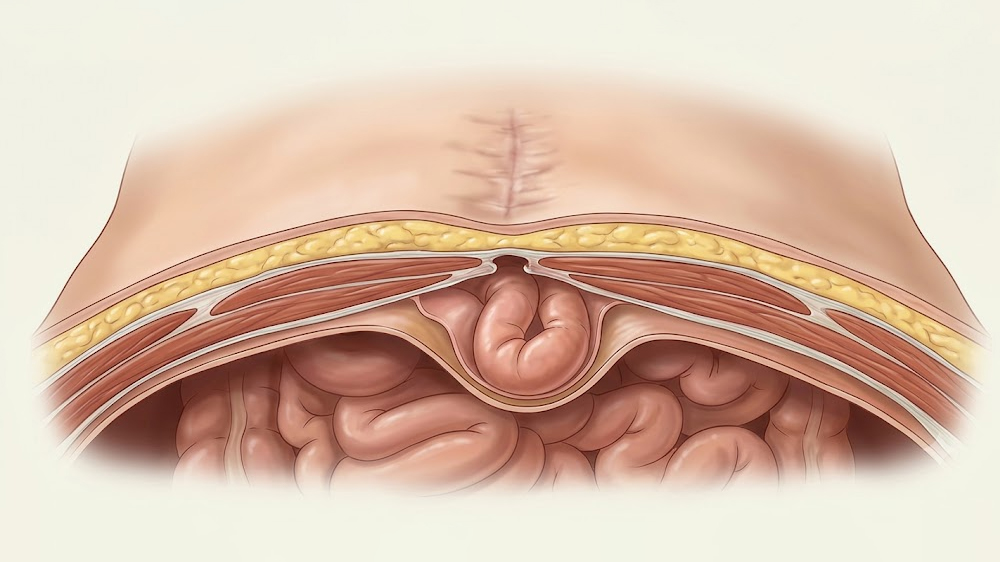
An incisional hernia is a type of hernia that develops at the site of a previous surgical incision. It occurs when abdominal tissue or organs push through a weakened area in the abdominal wall where a surgical incision was made. This is one of the most common complications following abdominal surgery.
Unlike other hernias that develop in naturally weak areas, incisional hernias are directly related to surgical scars. The abdominal wall may not heal completely after surgery, leaving a gap or weak spot through which tissue can protrude. This type of hernia can develop weeks, months, or even years after the initial surgery.
Causes and Risk Factors
Several factors can contribute to the development of an incisional hernia:
- Previous abdominal surgery – any surgery that involves an incision in the abdomen increases the risk
- Poor wound healing – infections or poor nutrition can affect how the surgical site heals
- Obesity – excess weight puts additional strain on the healing incision
- Chronic coughing or sneezing – increases pressure on the abdominal wall
- Heavy lifting – straining during recovery can weaken the surgical site
- Pregnancy – increased abdominal pressure during pregnancy
- Smoking – impairs blood flow and delays wound healing
- Age – older patients have weaker connective tissue
Symptoms of Incisional Hernia
Common signs and symptoms of an incisional hernia include:
- A visible bulge or swelling at or near the surgical scar site
- Pain or discomfort at the incision site, especially when straining or lifting
- A feeling of pressure or heaviness at the surgical site
- The bulge may become larger when coughing, standing, or straining
- In some cases, nausea or vomiting if the hernia becomes incarcerated or strangulated
In some cases, an incisional hernia may be asymptomatic and only discovered during a routine physical examination.
Types of Incisional Hernia
Incisional hernias can be classified based on their location and characteristics:
- Midline Incisional Hernia – occurs along the midline of the abdomen, often following surgeries like laparotomy or C-section
- Paramedian Incisional Hernia – develops along the side of the midline, following surgeries with lateral incisions
- Complex Incisional Hernia – multiple hernias or recurrent hernias that require more complex surgical repair
- Recurrent Incisional Hernia – hernia that returns after previous surgical repair
Incisional Hernia Surgery Options
Incisional hernia repair is a specialized surgical procedure that requires careful planning and expertise. The goal is to close the defect in the abdominal wall and reinforce it to prevent recurrence. Dr. Surendra Pal Jakhar offers several surgical approaches:
- Open Incisional Hernia Repair – involves making an incision over the hernia site, reducing the protruding tissue, and closing the defect with sutures or mesh. This approach is often used for larger or more complex hernias.
- Laparoscopic Incisional Hernia Repair – a minimally invasive technique using small incisions and a camera to repair the hernia. This approach offers faster recovery, less pain, and smaller scars.
- Robotic-Assisted Incisional Hernia Repair – utilizes robotic technology for enhanced precision and dexterity, particularly beneficial for complex or recurrent hernias.
- Component Separation Technique – a specialized approach for large or complex hernias where the abdominal muscles are separated and repositioned to close the defect without tension.
The choice of surgical approach depends on the size and location of the hernia, patient health, and surgeon's recommendation.
Recovery After Incisional Hernia Surgery
Recovery time depends on the type of surgery performed and the size of the hernia. Patients undergoing laparoscopic or robotic surgery typically return to normal activities within 2–3 weeks, while open surgery may require 4–6 weeks of recovery. Post-operative care includes:
- Rest and avoidance of heavy lifting for 6–8 weeks
- Pain management with prescribed medications
- Gradual return to physical activities as advised
- Follow-up appointments to monitor healing
- Proper wound care to prevent infection
Why Choose Dr. Surendra Pal Jakhar for Incisional Hernia Surgery?
- Expert in both open and advanced laparoscopic hernia repair techniques
- Specialized experience in complex and recurrent incisional hernia repairs
- High success rate with minimal recurrence
- Use of premium quality mesh for durable and safe repair
- Personalized care with comprehensive pre- and post-operative support
- Minimally invasive options for faster recovery and less pain
- Over 10+ years of experience in gastrointestinal and hernia surgery
If you or a loved one are experiencing symptoms of an incisional hernia, schedule a consultation with Dr. Surendra Pal Jakhar for an accurate diagnosis and personalized treatment plan.
Book a Consultation
Early diagnosis and timely treatment are essential for preventing complications such as incarceration or strangulation. Contact our clinic today to book an appointment with Dr. Surendra Pal Jakhar, one of the best gastrointestinal and advanced laparoscopic surgeons in Jaipur.