
Pancreatic Resection
- Home
- /
- Pancreatic Disorders
- /
- Pancreatic Resection
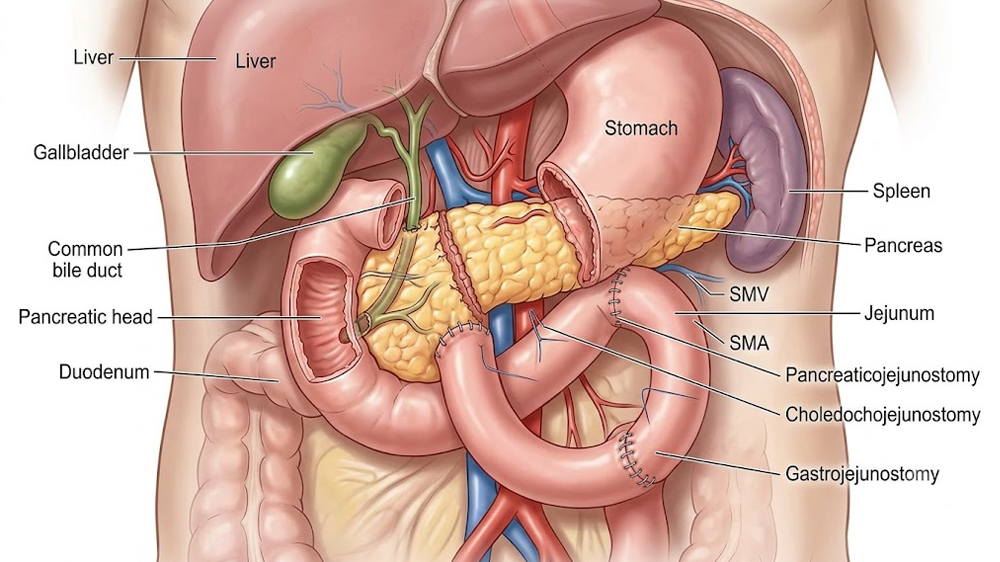
Surgical Removal of Pancreatic Tumors
Pancreatic resection is a complex surgical procedure involving the removal of a portion or all of the pancreas. It is performed to treat various pancreatic conditions, including pancreatic cancer, neuroendocrine tumors, cystic neoplasms, and severe chronic pancreatitis. The type of resection depends on the location and extent of the disease.
Dr. Surendra Pal Jakhar has extensive experience in performing pancreatic resections, including distal pancreatectomy, central pancreatectomy, and total pancreatectomy. Using advanced surgical techniques and meticulous perioperative care, he achieves optimal outcomes for patients with pancreatic disorders.
Types of Pancreatic Resection
- Distal Pancreatectomy: Removal of the body and tail of the pancreas, often with splenectomy. Indicated for tumors in the distal pancreas, including pancreatic cancer, neuroendocrine tumors, and cystic lesions.
- Central Pancreatectomy: Removal of the central portion of the pancreas with preservation of the proximal and distal segments. Indicated for benign or low-grade malignant tumors in the mid-pancreas.
- Total Pancreatectomy: Removal of the entire pancreas. Indicated for extensive disease, multifocal tumors, or selected cases of chronic pancreatitis with severe pain.
- Pancreaticoduodenectomy (Whipple Procedure): Removal of the head of the pancreas, duodenum, and distal bile duct. This is a separate procedure performed for tumors in the pancreatic head or periampullary region.
- Enucleation: Removal of small, benign tumors while preserving the surrounding pancreatic tissue.
Indications for Pancreatic Resection
- Pancreatic Ductal Adenocarcinoma: The most common indication for pancreatic resection in the head, body, or tail.
- Pancreatic Neuroendocrine Tumors (PNETs): Functional and non-functional tumors.
- Mucinous Cystic Neoplasms: Potentially malignant cystic lesions.
- Intraductal Papillary Mucinous Neoplasms (IPMNs): With high-risk features or malignancy.
- Solid Pseudopapillary Tumors: Low-grade malignant tumors typically in young women.
- Severe Chronic Pancreatitis: With intractable pain or complications not responding to medical management.
Surgical Procedure Details
- Preoperative Preparation: Comprehensive imaging (CT, MRI, EUS), nutritional optimization, and management of diabetes or malabsorption.
- Surgical Approach: Usually performed via an open approach (midline or transverse incision), though minimally invasive (laparoscopic/robotic) approaches are increasingly used for selected cases.
- Pancreatic Mobilization: The pancreas is carefully mobilized, and the extent of resection is determined based on tumor location and involvement.
- Resection: The affected portion of the pancreas is removed with adequate margins.
- Reconstruction: Depending on the type of resection, pancreatic ductal drainage or anastomosis to the jejunum may be performed.
- Completion: Drains are placed near the pancreatic remnant, and the abdomen is closed.
Benefits of Pancreatic Resection
- Curative treatment for early-stage pancreatic cancer
- Relief from pain in chronic pancreatitis
- Improved survival in appropriately selected patients
- Preservation of pancreatic function (with partial resections)
- Resolution of biliary or duodenal obstruction
- Improved quality of life in patients with neuroendocrine tumors
Post-Operative Care and Recovery
- Hospital stay typically 7-14 days depending on the complexity of the procedure
- Intravenous antibiotics, fluids, and nutritional support
- Close monitoring of amylase, lipase, and blood glucose levels
- Early mobilization and physiotherapy to prevent complications
- Pancreatic enzyme supplementation and insulin management (if needed)
- Follow-up imaging and tumor marker surveillance
- Adjuvant chemotherapy or radiation therapy may be recommended based on pathological findings
Why Choose Dr. Surendra Pal Jakhar?
Dr. Surendra Pal Jakhar is a highly experienced gastrointestinal and pancreatic surgeon with specialized expertise in complex pancreatic resections. His meticulous surgical technique, comprehensive preoperative evaluation, and compassionate patient care ensure the best possible outcomes for patients with pancreatic disorders. Dr. Jakhar works closely with a multidisciplinary team including medical oncologists, radiation oncologists, endocrinologists, and nutritionists to provide holistic care tailored to each patient's condition.
Schedule a consultation today to discuss your pancreatic condition and explore the best surgical treatment options available.