
Bile Duct Stricture
- Home
- /
- Bile Duct Diseases
- /
- Bile Duct Stricture
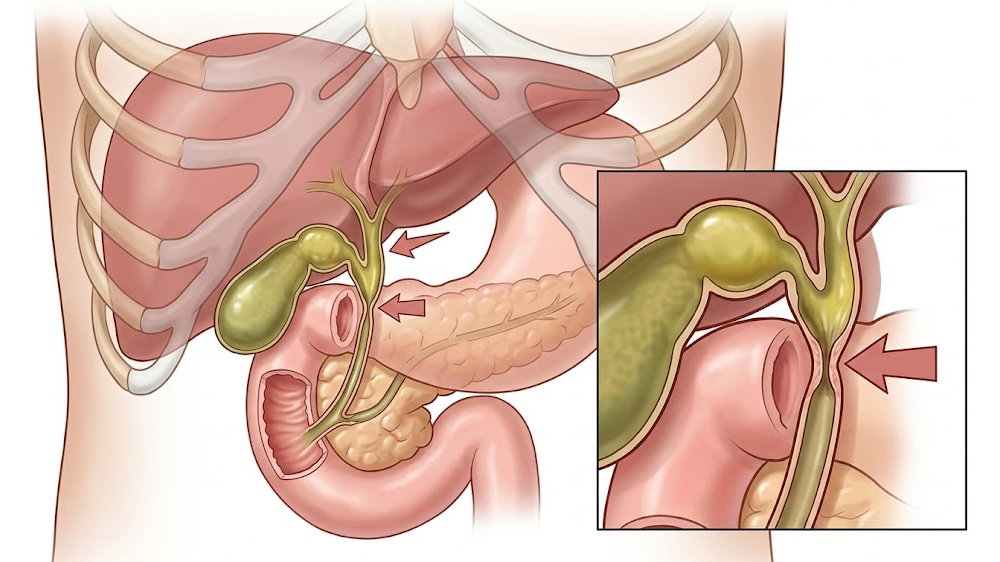
Expert Surgical Management for Bile Duct Strictures
A bile duct stricture is an abnormal narrowing of the bile duct that obstructs the flow of bile from the liver to the intestine. This condition can lead to serious complications including jaundice, cholangitis, liver damage, and cirrhosis. Strictures may be benign (non-cancerous) or malignant (cancerous), and accurate diagnosis is essential for appropriate management.
Dr. Surendra Pal Jakhar offers comprehensive surgical care for both benign and malignant bile duct strictures. Using advanced surgical techniques including minimally invasive and open procedures, we aim to restore normal bile flow, relieve symptoms, and achieve the best possible long-term outcomes for our patients.
Causes of Bile Duct Strictures
- Benign Causes:
- Iatrogenic injury during cholecystectomy or other biliary surgeries
- Primary sclerosing cholangitis (PSC)
- Chronic pancreatitis
- Recurrent pyogenic cholangitis
- Post-operative scarring
- Trauma or ischemia
- Malignant Causes:
- Cholangiocarcinoma (bile duct cancer)
- Pancreatic cancer
- Gallbladder cancer
- Metastatic disease
Common Symptoms
- Jaundice (yellowing of skin and eyes)
- Dark urine and pale stools
- Pruritus (itching)
- Abdominal pain, especially in the right upper quadrant
- Fever and chills (if cholangitis develops)
- Nausea and vomiting
- Unintentional weight loss and loss of appetite
Diagnostic Evaluation
- Blood Tests: Liver function tests (elevated bilirubin, alkaline phosphatase, GGT)
- Imaging Studies: Ultrasound, CT scan, MRI/MRCP
- Endoscopic Retrograde Cholangiopancreatography (ERCP): For diagnosis and therapeutic intervention
- Percutaneous Transhepatic Cholangiography (PTC): For proximal strictures
- Brush Cytology or Biopsy: To rule out malignancy
Surgical Treatment Options
- Roux-en-Y Hepaticojejunostomy: The gold standard surgical procedure for benign bile duct strictures. It involves creating a bypass between the bile duct and the jejunum (small intestine) to restore bile flow.
- Choledocho-Duodenostomy: A direct anastomosis between the common bile duct and the duodenum, suitable for certain types of strictures.
- Choledochojejunostomy: Similar to hepaticojejunostomy but at a lower level.
- Biliary Stenting (Endoscopic or Percutaneous): For temporary relief or as a bridge to surgery.
- Resection of Malignant Stricture: For cancerous strictures, curative resection with negative margins offers the best prognosis.
Benefits of Surgical Treatment
- Restoration of normal bile flow
- Relief from jaundice, itching, and other symptoms
- Prevention of recurrent cholangitis and liver damage
- Improvement in quality of life
- Potential for cure in malignant strictures
- Long-term durability with low recurrence rates
Post-Operative Care and Recovery
- Hospital stay typically ranges from 5 to 10 days
- Pain management and gradual mobilization
- Dietary modifications – soft diet progressing to regular diet
- Monitoring liver function and nutritional status
- Follow-up imaging to ensure patency of the anastomosis
- Regular surveillance for recurrence or complications
Why Choose Dr. Surendra Pal Jakhar?
Dr. Surendra Pal Jakhar has extensive experience in hepatobiliary surgery, including complex bile duct stricture repairs. His expertise in both open and laparoscopic techniques allows him to tailor the surgical approach to each patient's specific condition. With a focus on meticulous surgical technique and comprehensive perioperative care, Dr. Jakhar is committed to achieving excellent outcomes and improving the quality of life for patients with bile duct strictures.
Schedule a consultation today to discuss your condition and explore the best treatment options for bile duct stricture.