
Rectal Prolapse
- Home
- /
- Large Bowel Disorders
- /
- Rectal Prolapse
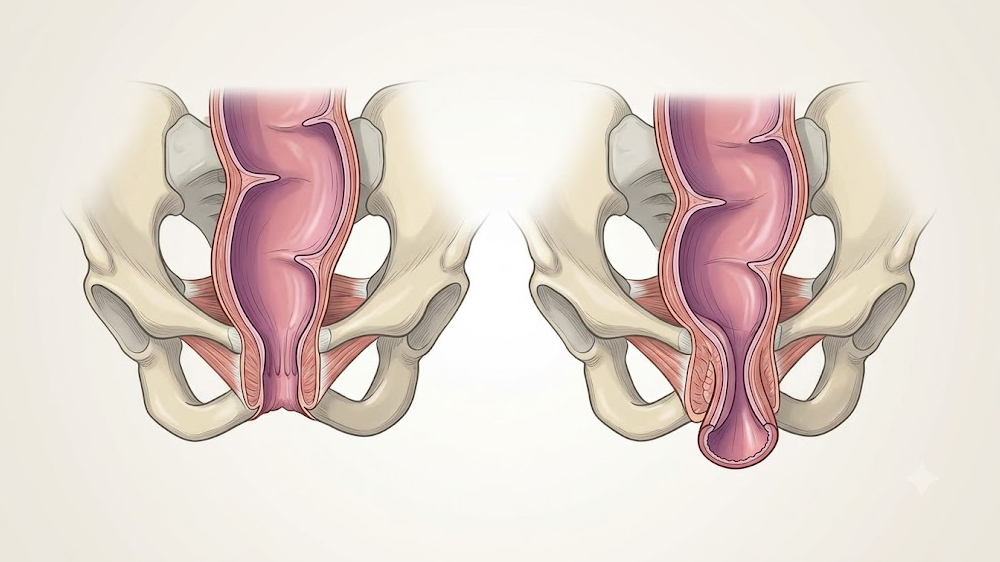
Surgical Management of Rectal Prolapse
Rectal prolapse is a condition in which the rectum (the last part of the large intestine) protrudes through the anus. It can be partial (only the mucosa) or complete (full thickness of the rectal wall). This condition is more common in elderly patients, particularly women, but can also occur in younger individuals. It can cause significant discomfort, incontinence, and impairment of quality of life.
Dr. Surendra Pal Jakhar offers comprehensive surgical treatment for rectal prolapse, utilizing both abdominal (laparoscopic and open) and perineal approaches. The choice of procedure depends on the patient's age, overall health, severity of prolapse, and associated symptoms. Our goal is to restore normal anatomy, improve bowel function, and enhance quality of life.
Types of Rectal Prolapse
- Partial Prolapse (Mucosal Prolapse): Only the rectal mucosa protrudes through the anus, typically less than 3-4 cm.
- Complete Prolapse (Full-Thickness Prolapse): All layers of the rectal wall protrude through the anus. The rectum appears as a concentric, dark red mass.
- Internal Prolapse (Intussusception): The rectum folds inward but does not protrude through the anus; it is detected on defecography.
Common Causes and Risk Factors
- Chronic constipation and straining during bowel movements
- Pelvic floor weakness (especially in women after childbirth)
- Increasing age (weakening of pelvic floor muscles)
- Neurological conditions affecting pelvic nerves
- Previous pelvic surgery
- Prolonged diarrhea
- Chronic cough or conditions that increase intra-abdominal pressure
Common Symptoms
- A visible bulge protruding from the anus during bowel movements or straining
- Difficulty controlling bowel movements (fecal incontinence)
- Mucous discharge from the anus
- Bleeding from the rectum
- A feeling of incomplete evacuation
- Low back pain or pelvic pressure
- Constipation or difficulty initiating bowel movements
Surgical Treatment Options
- Laparoscopic Suture Rectopexy: A minimally invasive procedure that involves mobilizing the rectum and securing it to the sacrum using sutures or mesh. This is the preferred approach for fit patients as it offers faster recovery and less pain.
- Delorme's Procedure: A perineal approach where the prolapsed mucosa is excised and the remaining muscular wall is plicated. Suitable for elderly or high-risk patients.
- Altemeier's Procedure (Perineal Proctosigmoidectomy): Resection of the prolapsed segment through the perineal approach. Often used for complete full-thickness prolapse in elderly patients.
- Open Rectopexy: An abdominal approach with a larger incision. Reserved for cases where laparoscopic surgery is not feasible.
- Robotic Rectopexy: A robotic-assisted approach with enhanced precision and visualization.
Benefits of Surgical Treatment
- Resolution of the prolapse and associated symptoms
- Improvement in fecal continence
- Relief from discomfort and pressure
- Restoration of normal bowel function
- Enhanced quality of life
- Minimally invasive options available (laparoscopic approach)
Post-Operative Care and Recovery
- Hospital stay typically 2-4 days for abdominal procedures; 1-2 days for perineal procedures
- Pain management with oral analgesics
- Gradual return to normal diet – starting with clear liquids, then a high-fiber diet
- Stool softeners to prevent constipation and straining
- Avoidance of heavy lifting and strenuous activities for 4-6 weeks
- Regular follow-up to monitor for recurrence and assess bowel function
Why Choose Dr. Surendra Pal Jakhar?
Dr. Surendra Pal Jakhar is a highly experienced colorectal and laparoscopic surgeon with specialized expertise in the surgical management of rectal prolapse. His approach combines meticulous surgical technique with comprehensive preoperative evaluation and personalized care planning. Dr. Jakhar offers both abdominal and perineal approaches, tailoring the procedure to each patient's specific needs and overall health status. He is committed to providing compassionate, patient-centered care and achieving the best possible outcomes for his patients.
Schedule a consultation today to discuss your rectal prolapse symptoms and explore the best surgical treatment options available.