
Laparoscopic Colectomy
- Home
- /
- Large Bowel Disorders
- /
- Laparoscopic Colectomy
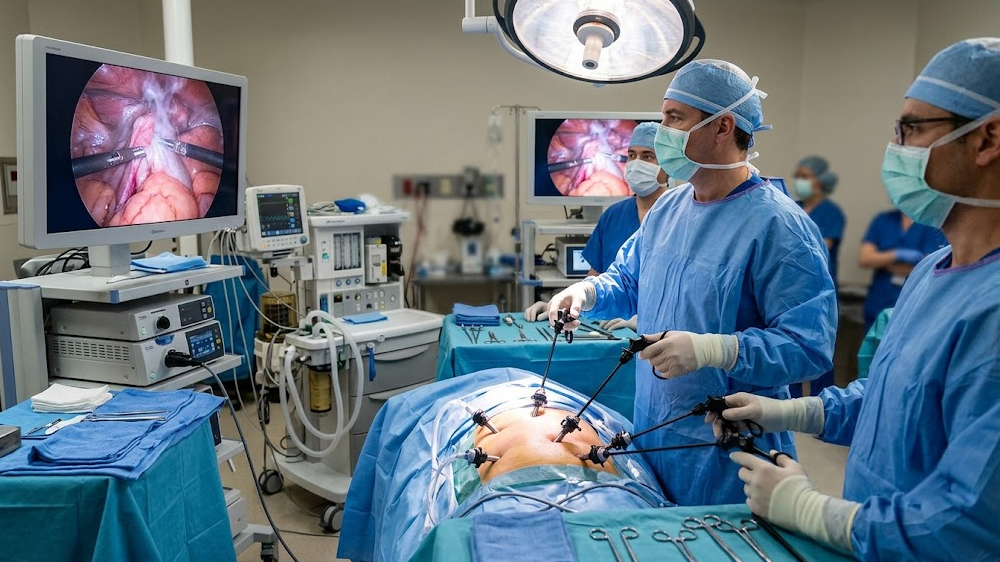
Minimally Invasive Colon Resection Surgery
Laparoscopic colectomy is a minimally invasive surgical procedure used to remove a portion of the colon (large intestine). It is performed through several small incisions using specialized instruments and a camera for visualization. This advanced technique offers numerous benefits over traditional open surgery, including faster recovery, less pain, and better cosmetic outcomes.
Dr. Surendra Pal Jakhar has extensive experience in performing laparoscopic colectomy for various conditions, including colon cancer, diverticulitis, inflammatory bowel disease, and benign colonic polyps. His expertise in advanced laparoscopic techniques ensures optimal outcomes for patients requiring colon resection.
Indications for Laparoscopic Colectomy
- Colon Cancer: Malignant tumors of the colon requiring surgical resection for curative or palliative intent.
- Diverticulitis: Severe or recurrent inflammation of diverticula that is refractory to medical management.
- Inflammatory Bowel Disease (IBD): Crohn's disease or ulcerative colitis with complications or refractory symptoms.
- Colonic Polyps: Large polyps that cannot be removed endoscopically.
- Bowel Obstruction: Blockage of the colon due to tumors, adhesions, or other causes.
- Ischemic Colitis: Ischemia of the colon requiring resection of non-viable tissue.
- Volvulus: Twisting of the colon causing obstruction and ischemia.
Types of Laparoscopic Colectomy
- Right Hemicolectomy: Removal of the cecum, ascending colon, and part of the transverse colon.
- Left Hemicolectomy: Removal of the descending colon and part of the transverse colon.
- Sigmoid Colectomy: Removal of the sigmoid colon (the S-shaped portion of the colon).
- Total Colectomy: Removal of the entire colon (may be performed with ileal pouch formation).
- Extended Colectomy: Removal of a larger segment of the colon for extensive disease.
Benefits of Laparoscopic Colectomy
- Smaller incisions – reduced scarring and better cosmetic outcomes
- Less postoperative pain and reduced need for narcotic analgesics
- Shorter hospital stay – typically 3-5 days compared to 7-10 days for open surgery
- Faster return to normal activities and work
- Lower risk of wound infections and incisional hernias
- Reduced blood loss and lower transfusion requirements
- Earlier resumption of oral intake and bowel function
Post-Operative Care and Recovery
- Hospital stay typically 3-5 days
- Pain management with oral analgesics
- Early mobilization – patients are encouraged to walk within hours of surgery
- Gradual return to diet – starting with clear liquids and progressing to a high-fiber diet
- Stool softeners to prevent constipation
- Avoidance of heavy lifting and strenuous activities for 4-6 weeks
- Regular follow-up and surveillance, especially for cancer patients
Why Choose Dr. Surendra Pal Jakhar?
Dr. Surendra Pal Jakhar is a highly experienced laparoscopic and colorectal surgeon with specialized expertise in minimally invasive colon surgery. His advanced laparoscopic skills, combined with comprehensive preoperative evaluation and personalized care planning, ensure the best possible outcomes for patients undergoing colectomy. Dr. Jakhar is committed to providing compassionate, patient-centered care and achieving excellent surgical results with minimal discomfort and faster recovery.
Schedule a consultation today to discuss your colon condition and explore whether laparoscopic colectomy is the right treatment option for you.