
Laparoscopic Adhesiolysis & Bowel Resection
- Home
- /
- Small Bowel Disorders
- /
- Laparoscopic Adhesiolysis & Bowel Resection
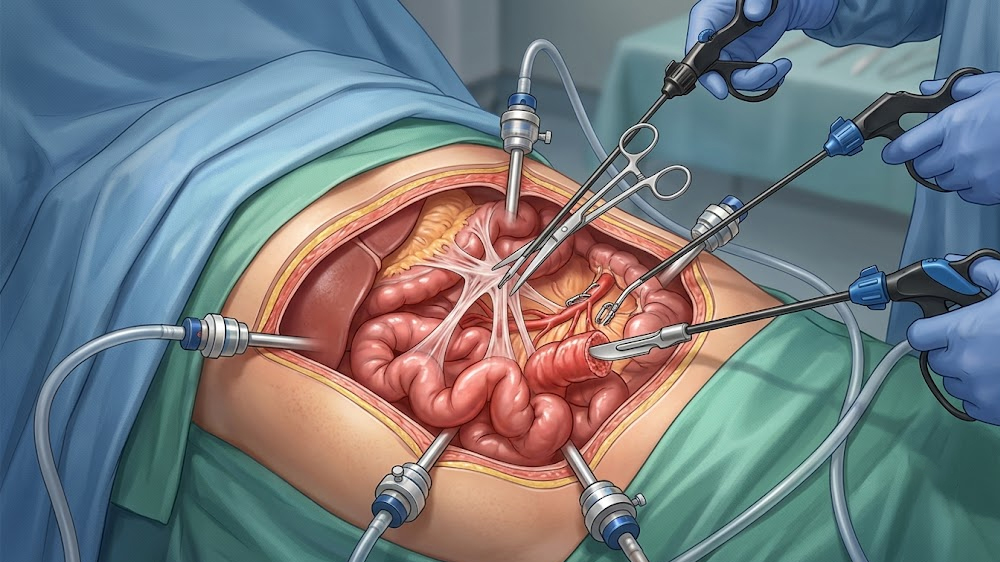
Minimally Invasive Surgery for Bowel Obstruction & Adhesions
Laparoscopic adhesiolysis and bowel resection is a minimally invasive surgical procedure performed to treat intestinal obstructions caused by adhesions (scar tissue) or to remove diseased segments of the small bowel. Adhesions are fibrous bands that form between abdominal organs and tissues, often as a result of previous abdominal surgeries, infections, or inflammatory conditions.
Dr. Surendra Pal Jakhar has extensive experience in performing laparoscopic adhesiolysis and bowel resection, utilizing advanced minimally invasive techniques to relieve obstructions, preserve healthy bowel, and promote faster recovery with less postoperative pain and scarring.
Indications for Laparoscopic Adhesiolysis & Bowel Resection
- Small Bowel Obstruction: Caused by adhesions, hernias, or strictures.
- Recurrent Adhesive Obstruction: Multiple episodes of bowel obstruction due to adhesions.
- Chronic Abdominal Pain: Due to adhesive disease causing partial obstruction or tethering of bowel loops.
- Intestinal Tumours: Benign or malignant tumours requiring resection.
- Crohn's Disease: Strictures or fistulas requiring surgical intervention.
- Ischaemic Bowel: Segments of bowel with compromised blood supply requiring resection.
- Traumatic Injury: Bowel perforation or injury requiring repair or resection.
Surgical Procedure Details
- Preoperative Preparation: Thorough evaluation with CT scan, blood tests, and nutritional optimization. Bowel preparation as indicated.
- Approach: Laparoscopic access through multiple small incisions with a camera and specialized instruments. In complex cases, a hybrid or open approach may be needed.
- Adhesiolysis: Careful division of adhesions using sharp and blunt dissection while protecting vital structures such as blood vessels and the ureter.
- Bowel Resection: Removal of the diseased or obstructed bowel segment with stapled or sutured anastomosis to restore continuity.
- Anastomosis: Primary anastomosis (end-to-end or side-to-side) to reconnect the healthy bowel ends.
- Drainage: Placement of surgical drains if indicated for complex cases or when contamination is present.
Benefits of Laparoscopic Adhesiolysis & Bowel Resection
- Minimally invasive – smaller incisions, less postoperative pain
- Reduced risk of incisional hernias and wound complications
- Shorter hospital stay and faster recovery
- Earlier return to normal activities and work
- Less postoperative ileus and earlier return of bowel function
- Better cosmetic outcomes
- Potential reduction in future adhesive obstruction formation
Post-Operative Care and Recovery
- Hospital stay typically 3-7 days depending on the complexity of the procedure
- Pain management with oral or intravenous analgesics
- Gradual advancement of diet – starting with clear liquids and progressing to a regular diet as bowel function returns
- Early mobilization to prevent thromboembolic complications
- Wound care and drain management
- Follow-up with the surgeon to monitor recovery and address any concerns
Why Choose Dr. Surendra Pal Jakhar?
Dr. Surendra Pal Jakhar is a highly experienced surgeon with specialized expertise in laparoscopic gastrointestinal surgery, including adhesiolysis and bowel resection. His advanced laparoscopic skills, combined with a meticulous surgical approach, ensure optimal outcomes for patients with bowel obstructions and adhesive disease. Dr. Jakhar works closely with a multidisciplinary team of gastroenterologists, radiologists, and nutritionists to provide comprehensive, patient-centered care tailored to each individual's needs.
Schedule a consultation today to discuss your condition and explore the best treatment options available for bowel obstruction and adhesions.