
Laparoscopic Meckle's Diverticulectomy
- Home
- /
- Small Bowel Disorders
- /
- Laparoscopic Meckle's Diverticulectomy
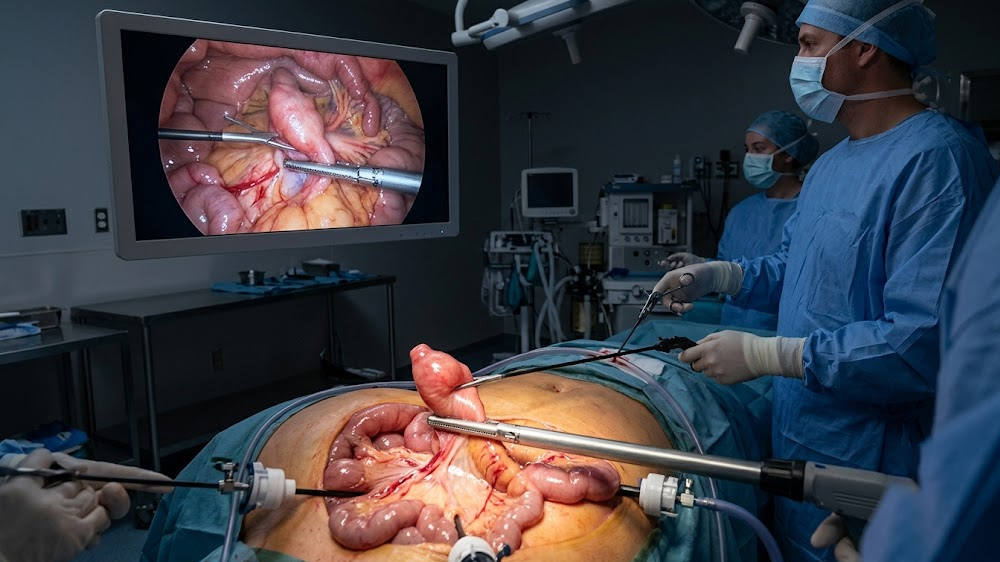
Minimally Invasive Treatment for Meckel's Diverticulum
Meckel's diverticulum is a congenital outpouching of the small intestine, present in approximately 2% of the population. It is the most common congenital anomaly of the gastrointestinal tract and can lead to complications such as bleeding, obstruction, inflammation, and perforation. Laparoscopic diverticulectomy is a minimally invasive surgical procedure performed to remove the diverticulum and prevent these complications.
Dr. Surendra Pal Jakhar has extensive experience in performing laparoscopic Meckel's diverticulectomy for patients with symptomatic diverticula. This advanced minimally invasive approach offers significant benefits over traditional open surgery, including smaller incisions, faster recovery, and reduced postoperative pain.
Indications for Laparoscopic Meckel's Diverticulectomy
- Gastrointestinal Bleeding: Unexplained lower GI bleeding, often presenting with melena or hematochezia, especially in young patients.
- Intestinal Obstruction: Due to intussusception, volvulus, or bands/adhesions from the diverticulum.
- Meckel's Diverticulitis: Inflammation of the diverticulum mimicking appendicitis, with right lower quadrant pain.
- Perforation: Life-threatening complication requiring emergency surgery.
- Incidental Finding: During laparoscopic exploration for other conditions, especially in younger patients with ectopic gastric or pancreatic tissue.
- Recurrent Symptoms: Persistent abdominal pain, nausea, or vomiting attributed to the diverticulum.
Common Symptoms
- Painless lower gastrointestinal bleeding (most common in children)
- Right lower quadrant abdominal pain (similar to appendicitis)
- Nausea and vomiting
- Abdominal distension and constipation (with obstruction)
- Palpable abdominal mass (in cases of intussusception)
- Signs of peritonitis in cases of perforation
Surgical Procedure Details
- Preoperative Preparation: Diagnostic workup including Tc-99m pertechnetate scan (Meckel's scan), CT abdomen, or capsule endoscopy to confirm the diagnosis.
- Approach: Laparoscopic access through 3-4 small incisions (usually 5-10 mm) with a camera for visualization.
- Identification: The small bowel is carefully examined from the ileocecal valve proximally to identify the diverticulum.
- Diverticulectomy: The diverticulum is resected using a linear stapler or through intracorporeal suturing techniques.
- Bowel Resection (if needed): In cases where the diverticulum is large or involves the base of the ileum, a segmental bowel resection may be performed.
- Specimen Retrieval: The specimen is removed through a small incision or using an endobag.
Benefits of Laparoscopic Meckel's Diverticulectomy
- Minimally invasive – smaller incisions, less pain, and faster recovery
- Reduced risk of wound complications and incisional hernias
- Shorter hospital stay (typically 1-3 days)
- Earlier return to normal activities
- Better cosmetic outcomes
- Lower risk of postoperative ileus and adhesions
Post-Operative Care and Recovery
- Hospital stay typically 1-3 days
- Pain management with oral medications
- Gradual advancement of diet – starting with clear liquids and progressing to solids
- Early mobilization to prevent complications
- Follow-up in 1-2 weeks for wound check and histopathology review
- Return to work and normal activities within 1-2 weeks
Why Choose Dr. Surendra Pal Jakhar?
Dr. Surendra Pal Jakhar is a highly experienced laparoscopic surgeon with specialized expertise in minimally invasive gastrointestinal surgery, including Meckel's diverticulectomy. His meticulous surgical technique, comprehensive preoperative evaluation, and compassionate patient care ensure the best possible outcomes for patients with Meckel's diverticulum. Dr. Jakhar utilizes the latest laparoscopic technology to provide safe, effective, and minimally invasive treatment.
Schedule a consultation today to discuss your symptoms and explore the best treatment options for Meckel's diverticulum.