
Mesenteric Cyst
- Home
- /
- Small Bowel Disorders
- /
- Mesenteric Cyst
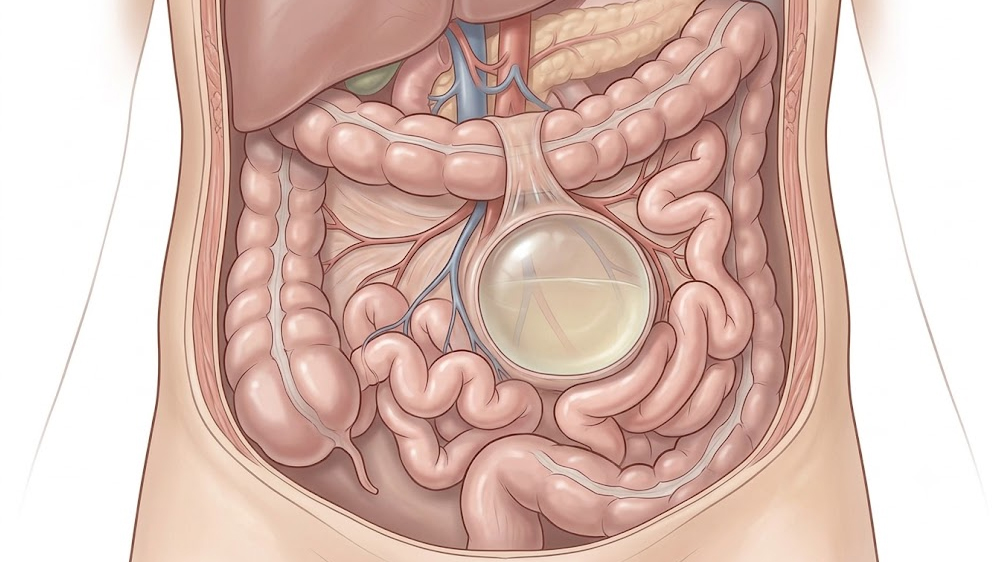
Surgical Treatment for Mesenteric Cysts
A mesenteric cyst is a rare, benign fluid-filled sac that develops in the mesentery – the double-layered membrane that attaches the intestine to the abdominal wall. These cysts can vary in size from a few centimeters to massive lesions that occupy a significant portion of the abdominal cavity. While most mesenteric cysts are asymptomatic and discovered incidentally, larger cysts can cause abdominal pain, bloating, nausea, and intestinal obstruction.
Dr. Surendra Pal Jakhar has extensive experience in the diagnosis and surgical management of mesenteric cysts, utilizing both laparoscopic and open techniques. Early diagnosis and complete surgical excision are essential to prevent complications such as torsion, rupture, hemorrhage, or infection, and to rule out rare malignant transformation.
Types of Mesenteric Cysts
- Chylous Cysts: Contain milky fluid rich in chyle; most common type.
- Serous Cysts: Contain clear, thin fluid similar to serum.
- Hemorrhagic Cysts: Contain blood; often post-traumatic or due to spontaneous bleeding.
- Infectious Cysts: May contain pus secondary to infection.
- Dermoid Cysts: Rare; contain elements of multiple tissue types.
Common Symptoms of Mesenteric Cysts
- Vague abdominal pain or discomfort
- Abdominal fullness or bloating
- Nausea and vomiting
- Palpable abdominal mass
- Early satiety
- Bowel obstruction (in large cysts)
- Weight loss
- Acute abdomen if complicated by torsion, rupture, or infection
Diagnosis of Mesenteric Cysts
- Ultrasound: First-line imaging modality – shows cystic lesion with internal echoes.
- CT Scan: Provides detailed information about size, location, relationship to adjacent structures, and presence of complications.
- MRI: Useful for characterization of cyst contents and soft tissue detail.
- Fine Needle Aspiration: May be performed for diagnostic purposes in selected cases.
- Laboratory Tests: Routine blood work to assess for infection or inflammation.
Surgical Treatment Options
- Laparoscopic Cyst Excision: The preferred approach for most mesenteric cysts. This minimally invasive technique involves complete removal of the cyst through small incisions, resulting in faster recovery and less postoperative pain.
- Open Cyst Excision: May be required for large cysts, cysts closely associated with major vessels, or when malignancy is suspected.
- Cyst Fenestration: Partial excision with drainage – reserved for cysts that are not amenable to complete excision.
- Bowel Resection: May be necessary if the cyst is intimately adherent to the bowel wall or involves the mesenteric vascular supply.
Benefits of Laparoscopic Cyst Excision
- Minimally invasive – small incisions, less pain, faster recovery
- Reduced risk of wound complications and incisional hernias
- Shorter hospital stay
- Early return to normal activities and work
- Excellent cosmetic outcomes
- Complete excision with minimal risk of recurrence
Post-Operative Care and Recovery
- Hospital stay typically 1-3 days for laparoscopic excision, longer for open surgery
- Pain management with oral analgesics
- Gradual advancement of diet – starting with clear liquids and progressing to solids as tolerated
- Early mobilization to prevent DVT and promote recovery
- Follow-up imaging to confirm complete excision and rule out recurrence
- Regular follow-up with the surgeon to monitor for any complications
Why Choose Dr. Surendra Pal Jakhar?
Dr. Surendra Pal Jakhar is a highly experienced gastrointestinal and laparoscopic surgeon with specialized expertise in the management of mesenteric cysts. His approach combines precise surgical technique with comprehensive preoperative evaluation and compassionate patient care. Dr. Jakhar utilizes the latest minimally invasive techniques to ensure optimal outcomes with minimal discomfort and faster recovery. He is committed to patient education and shared decision-making throughout the treatment journey.
Schedule a consultation today to discuss your abdominal symptoms and explore the best treatment options for mesenteric cysts.